

Seven Oceans Expeditions · Field Guide · Volume 4
Dive Greenland:
The New Frontier in Diving
What it’s like to dive Greenland: icebergs, shipwrecks, Arctic marine life, when to go and what to know before you do.
About This Guide
Greenland has thousands of miles of coastline. Most of it is inaccessible and rarely dived. Until now.
This guide covers what diving in Greenland is like: the icebergs, the wrecks, the marine life, the conditions and what to know before you go. It draws on our own expeditions along the west coast, beginning with the first organized polar diving expedition on this coast in June 2026, and on published research into Greenland’s marine life.
Why Dive Greenland
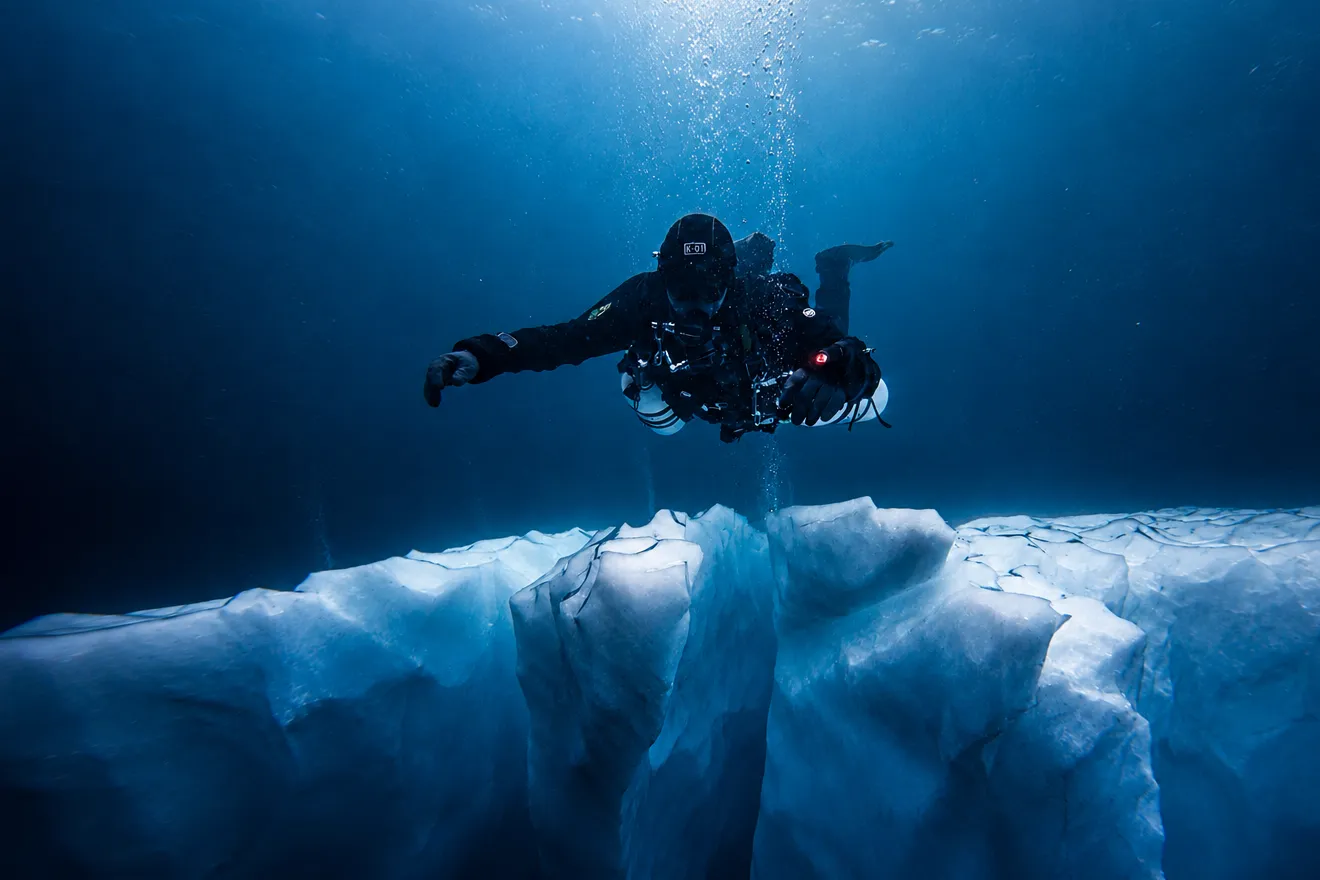
Greenland’s coastline is vast and varied: deep fjords, open coast, islands and skerries, and a shoreline shaped by ice and time.
Diving here isn’t easy. There are no dive shops, no dive resorts and no dive boats waiting at the dock. Towns are small and far apart, and no roads connect them. Reaching most of the coast takes a vessel, a crew that knows these waters and a dive team equipped to be self-sufficient.
That’s also what makes it special. Greenland is a diving destination defined by discovery.
Icebergs as far as the eye can see. The prospect of finding long-forgotten shipwrecks. Arctic marine life, from tiny sea angels to wolffish, seals and humpback whales. Underwater geologic formations shaped by ice, water and time. Above all, the chance to dive where few, if any, have dived before.
Tom Popper, Founder, Seven Oceans Expeditions
What You’ll See Underwater: Icebergs
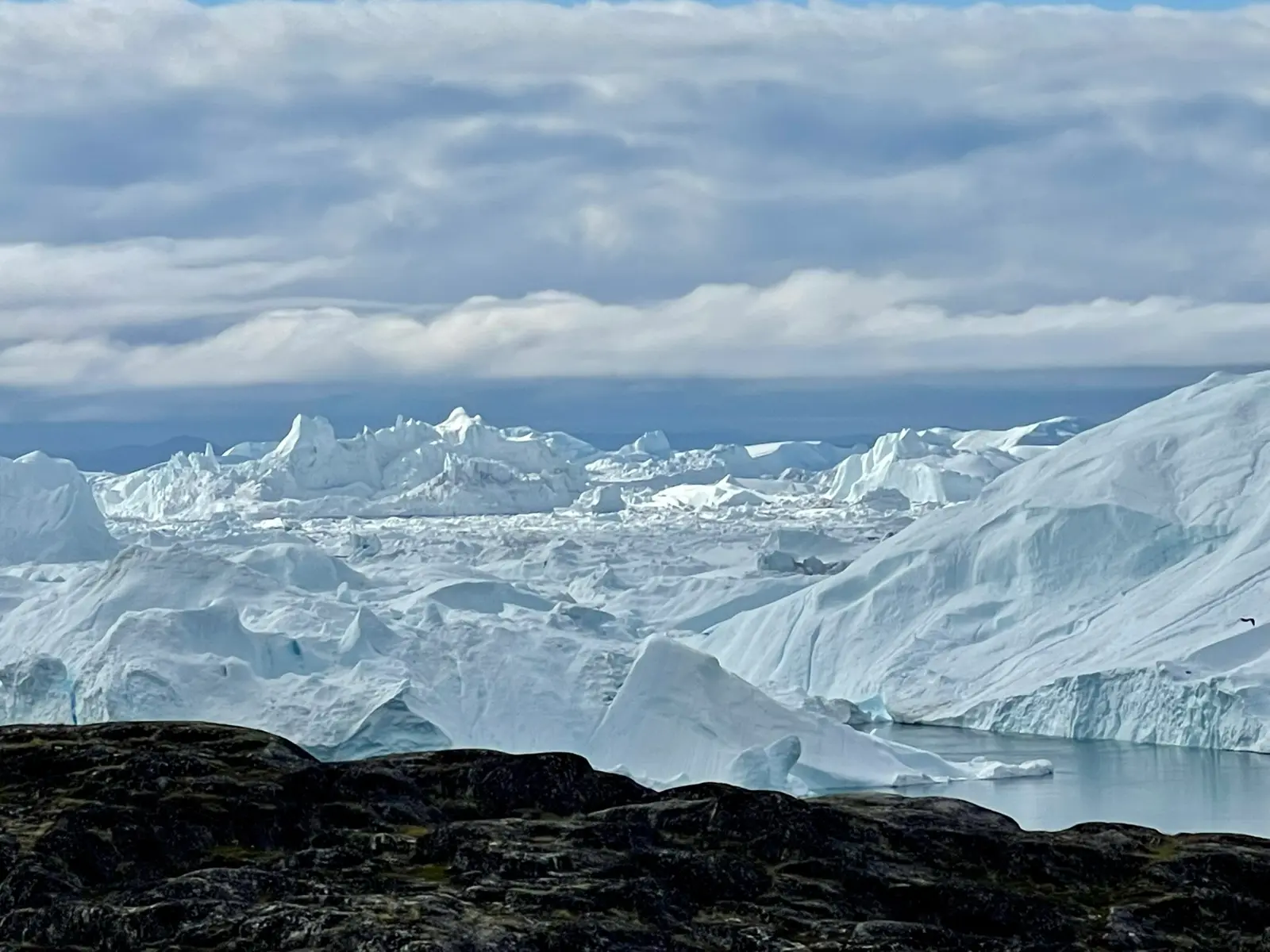
For most divers, the chance to dive alongside an iceberg is a special moment. We dive lots of them. In the north, Disko Bay is full of icebergs. Most of them calve from Sermeq Kujalleq, one of the fastest-moving glaciers in the world, into the Ilulissat Icefjord, a UNESCO World Heritage Site. In the south, icebergs drift up the coast from East Greenland, though how many depends on currents and weather.
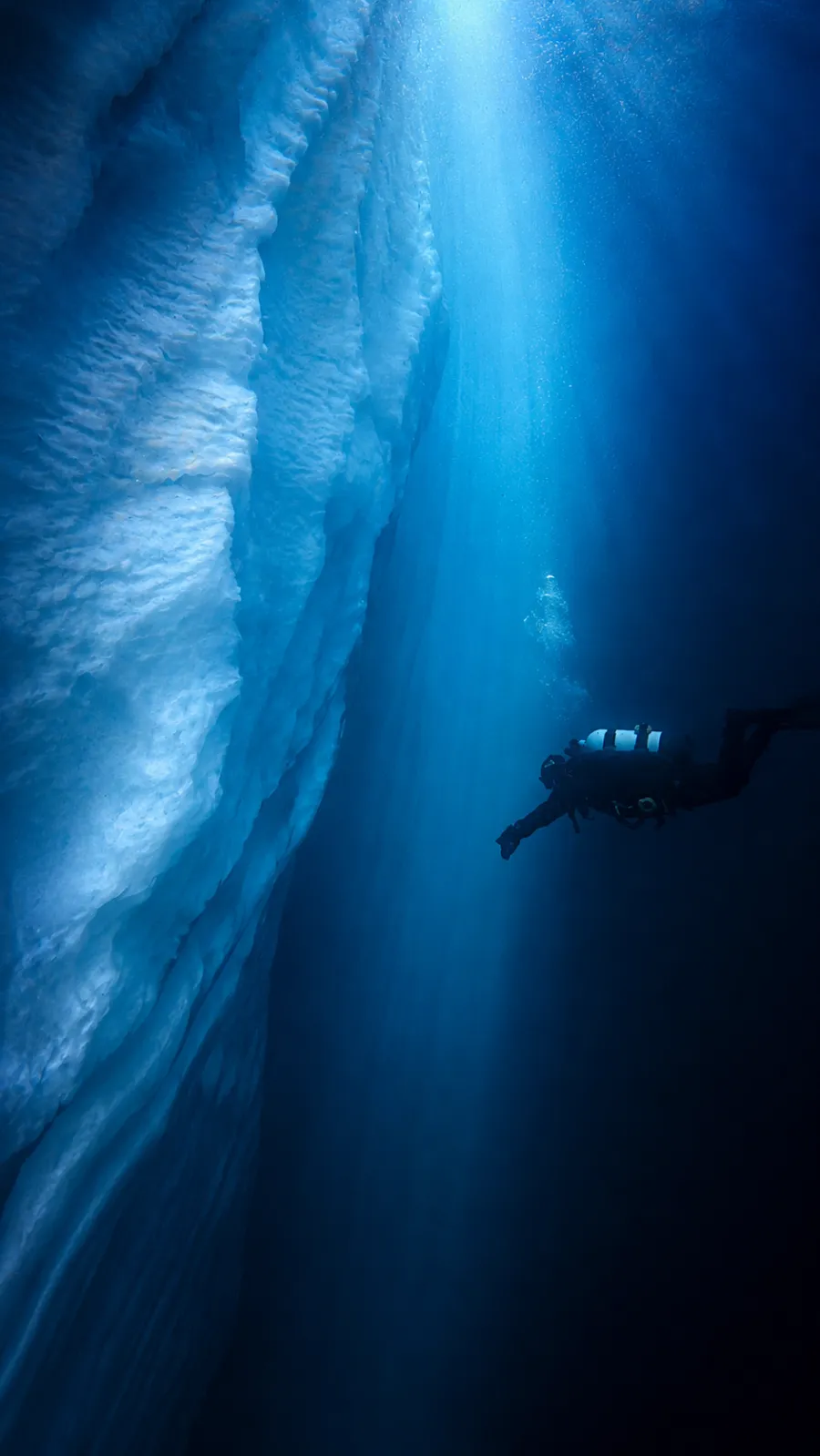
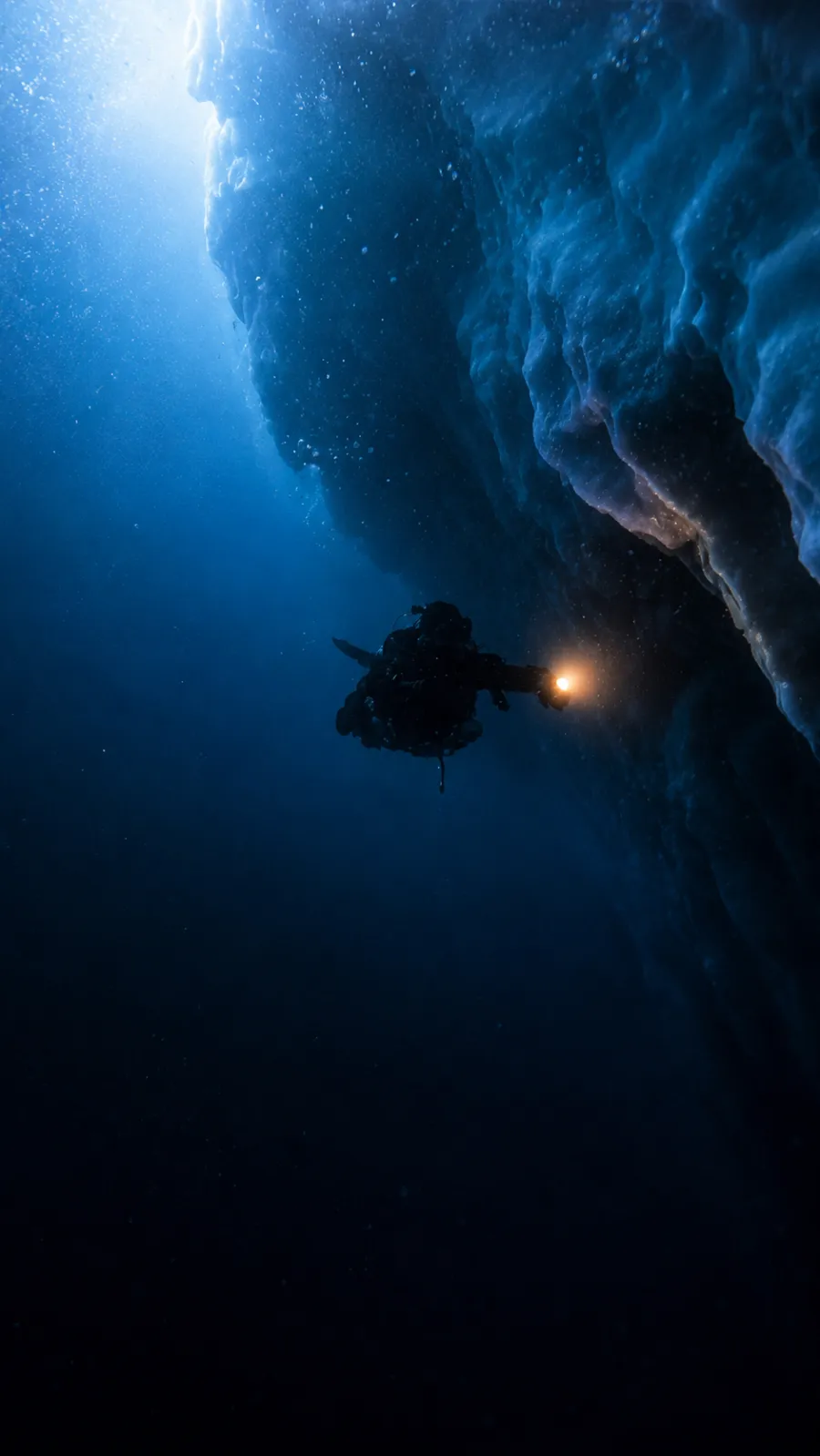
Diving beside an iceberg is one of the most remarkable experiences in diving. No two icebergs look or act the same. The textures, the light and the sounds heighten all of your senses. It’s an underwater world like no other.
For all their beauty, icebergs can be unpredictable. We follow careful protocols and dive only icebergs that minimize risk. And because about 90% of an iceberg’s mass is below the surface, what looks like a plain iceberg from the boat is often extraordinary below it.
How we select, brief and dive each iceberg is covered in Field Guide Volume 3: How to Safely Dive an Iceberg.
What You’ll See Underwater: Undiscovered Shipwrecks
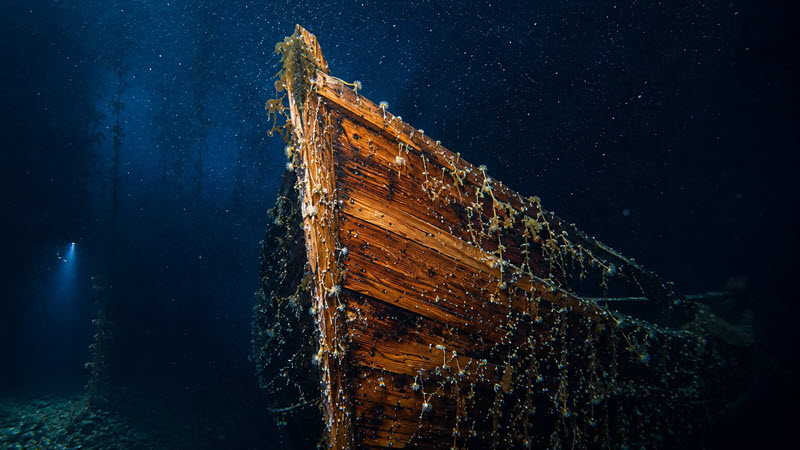
Greenland’s waters hold wrecks that have never been documented. To date, we haven’t found an official record of diveable shipwrecks in Greenland from either the Greenlandic or the Danish authorities. We’re still looking.
What we do know: shipping has always been the main way people and goods move around Greenland. Where there is shipping, there are shipwrecks.
Our team works with Greenland’s maritime community, gathering leads and stories about where wrecks might lie. We follow a lead, corroborate it and search for the wreck. More often than not, we don’t find it. But the diving, wherever we end up, is always rewarding.
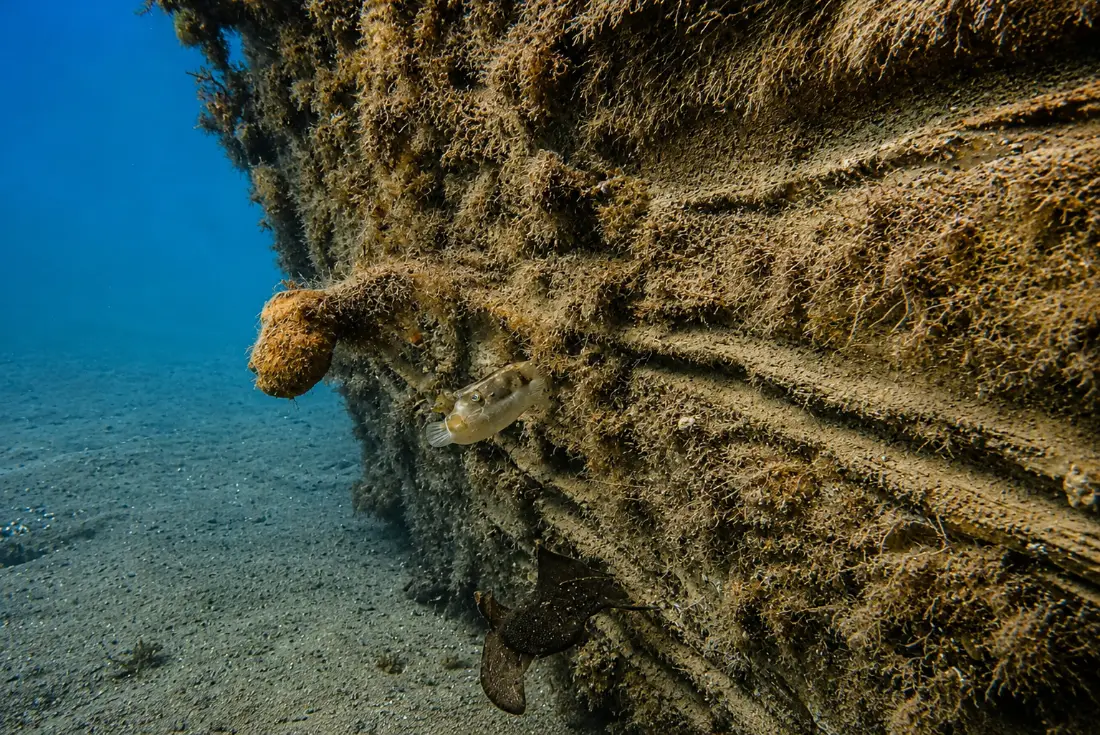
On our inaugural expedition, we found a wreck on the northern route that we believe is a Portuguese vessel from the early 20th century, based on our discussions with the maritime community. One of the divers on that expedition is researching its origin and writing an article on the find, to be published.
We’ll return to this wreck, and to others we find, on future expeditions to evaluate their integrity and see what else we can learn.
What You’ll See Underwater: Arctic Marine Life
Greenland’s waters are cold and full of life, from macro to pelagic. The species below are documented in West Greenland’s coastal waters. What you see on any dive depends on the site, depth and conditions.
Fish
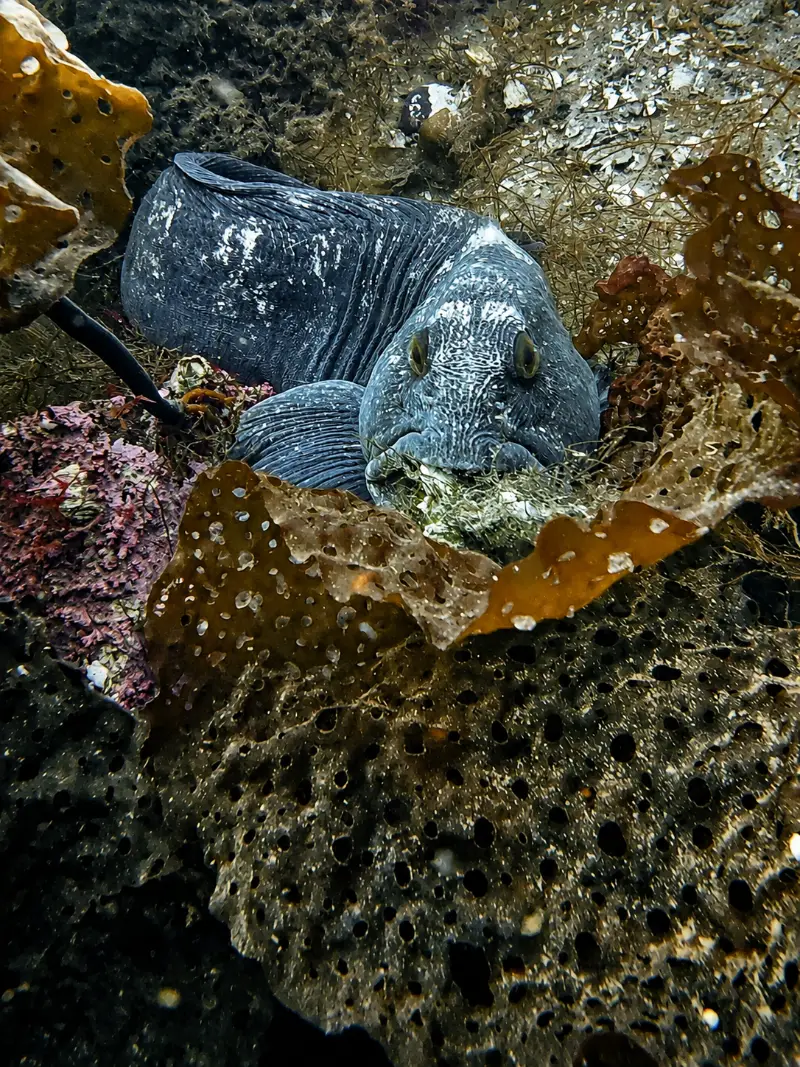
- Wolffish: Atlantic, spotted and northern wolffish live on rocky and sandy bottoms along the west coast.
- Cod: Atlantic cod and Greenland cod, in the fjords and along the coast.
- Golden redfish: common in the fjords.
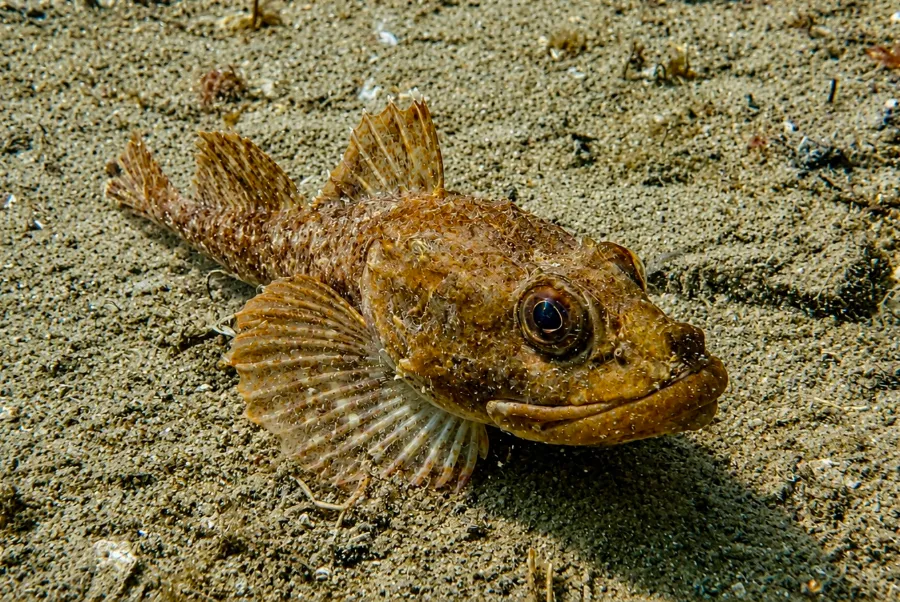
- Sculpins and Arctic shanny: on the bottom, in the kelp and in rock crevices.
- Lumpfish: come inshore to spawn in spring. The West Greenland lumpfish season peaks in late May and early June.
- Capelin: spawn in shallow water along the coast from May to July.
- Arctic char: sea-run char feed in shallow water near shore for 4 to 8 weeks each summer before returning to the rivers.
On the Bottom
- Echinoderms: green sea urchins, sea stars, brittle stars and sea cucumbers.
- Crabs: including lyre crabs and toad crabs.
- Nudibranchs: including the bushy-backed sea slug (Dendronotus frondosus).
- Anemones, sponges, shrimps and chitons on the rocks and walls.
Around the Ice and in the Water Column
Around icebergs, where meltwater mixes with seawater, plankton gathers and small animals follow. Look for sea angels (Clione limacina) hunting sea butterflies, comb jellies scattering light into a moving rainbow, small reddish Arctic jellies and shoals of mysid shrimp.
Kelp Forests
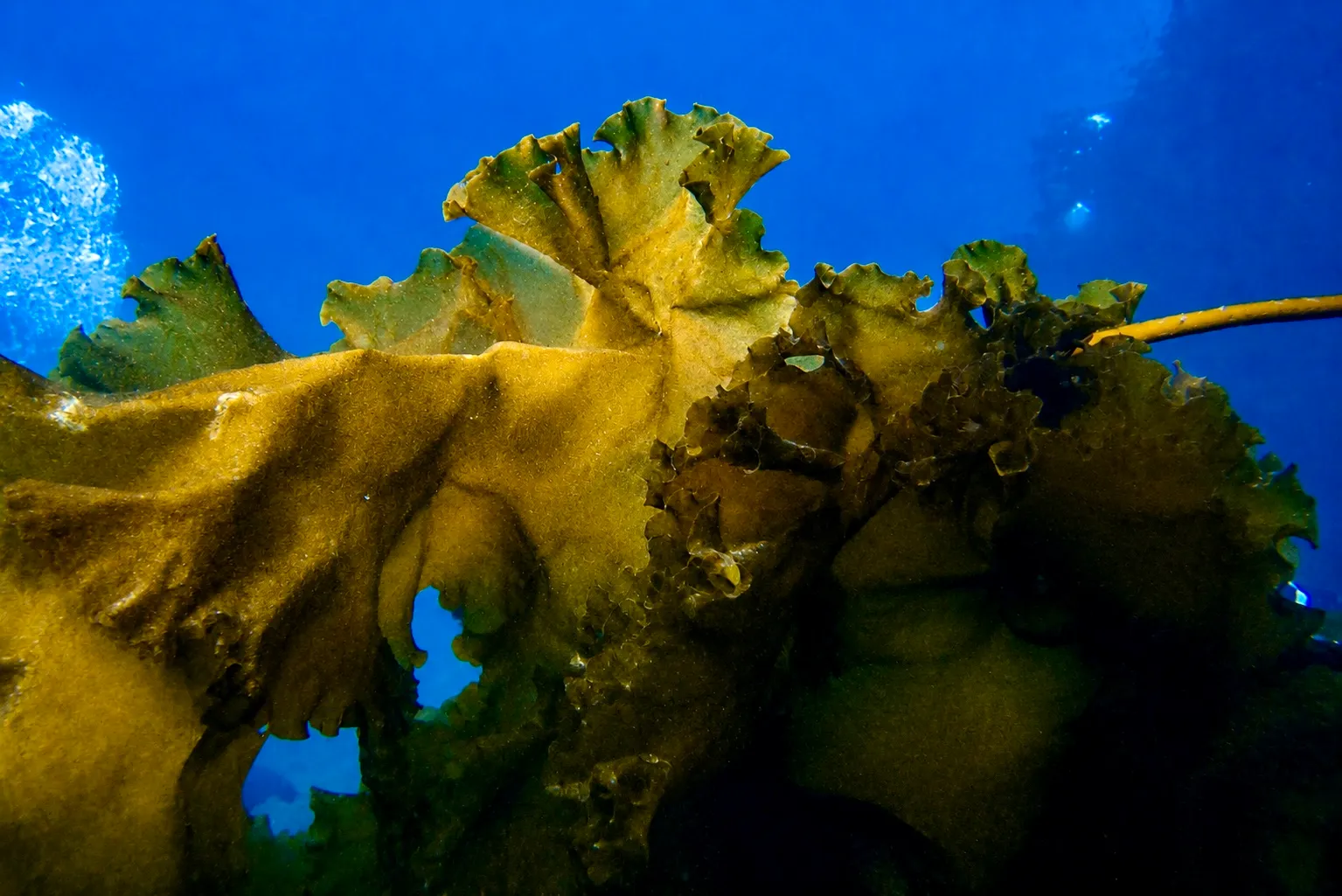
Kelp forests grow along much of the coast. Sugar kelp and its relatives, shotgun kelp (Agarum clathratum) and winged kelp (Alaria esculenta) form the canopy. In Disko Bay, kelp often grows deeper than 30 m (100 ft).
Whales
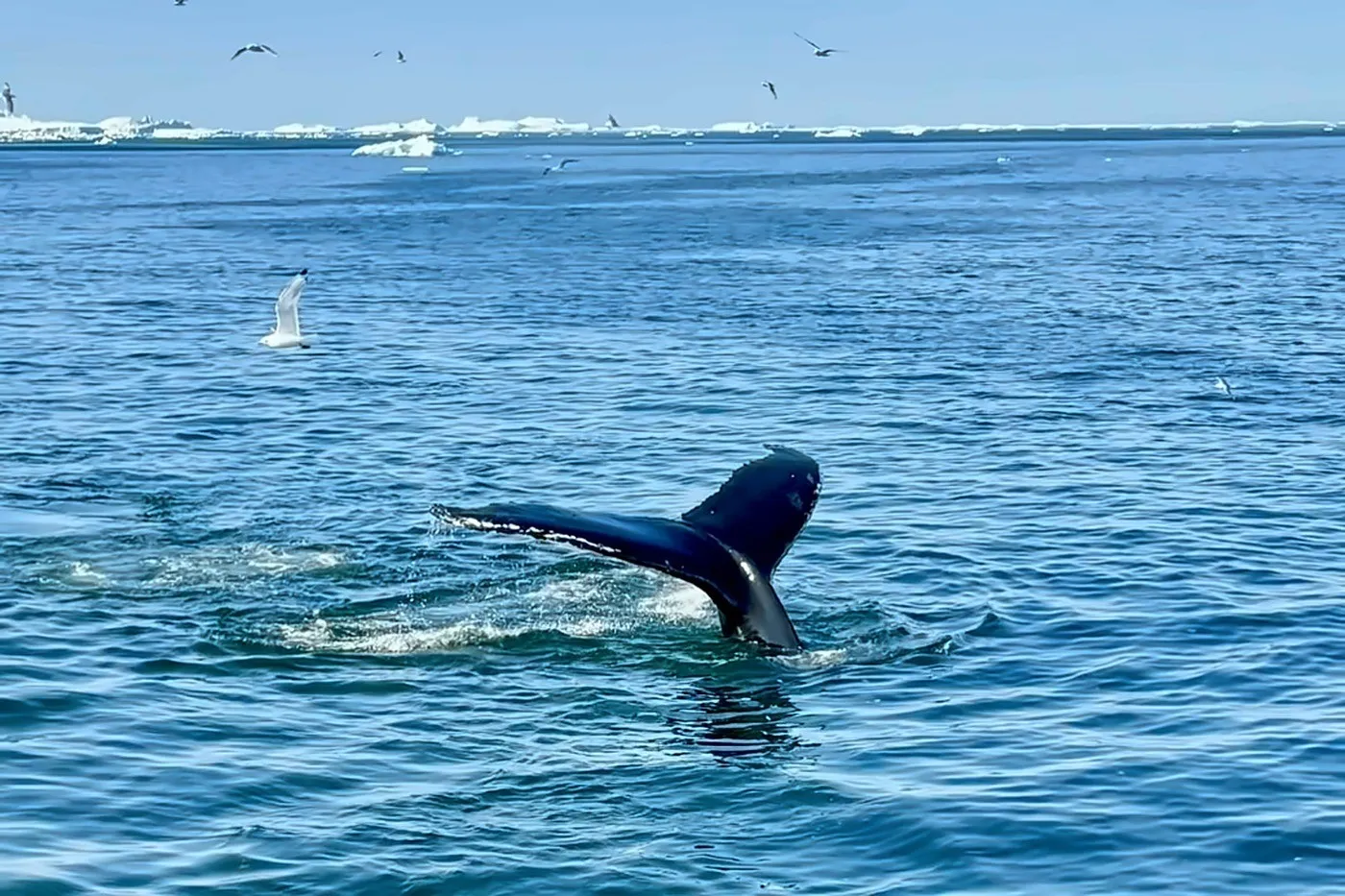
In summer, humpback, minke and fin whales feed in Disko Bay, and a group of humpbacks returns to Nuuk Fjord each summer. They’re typically present in July and August, when krill increase as the water warms slightly.
Seals
Five seal species live in Greenland’s waters: harp, ringed, hooded, bearded and harbor seals. Harp seals gather in the fjords in summer to feed. Seals are rarely seen underwater, but if we find a colony, it’s sometimes possible to dive near it.
Polar Bears
We’re often asked whether we’ll see polar bears. They are seldom seen on Greenland’s west coast. Most live in the far north and east, so the chance of diving with one is close to zero.
Above the Waterline
Topside, Greenland is as dramatic as it is underwater. Mountains rise straight out of the fjords, icebergs drift past the ship and whales feed in the bays.
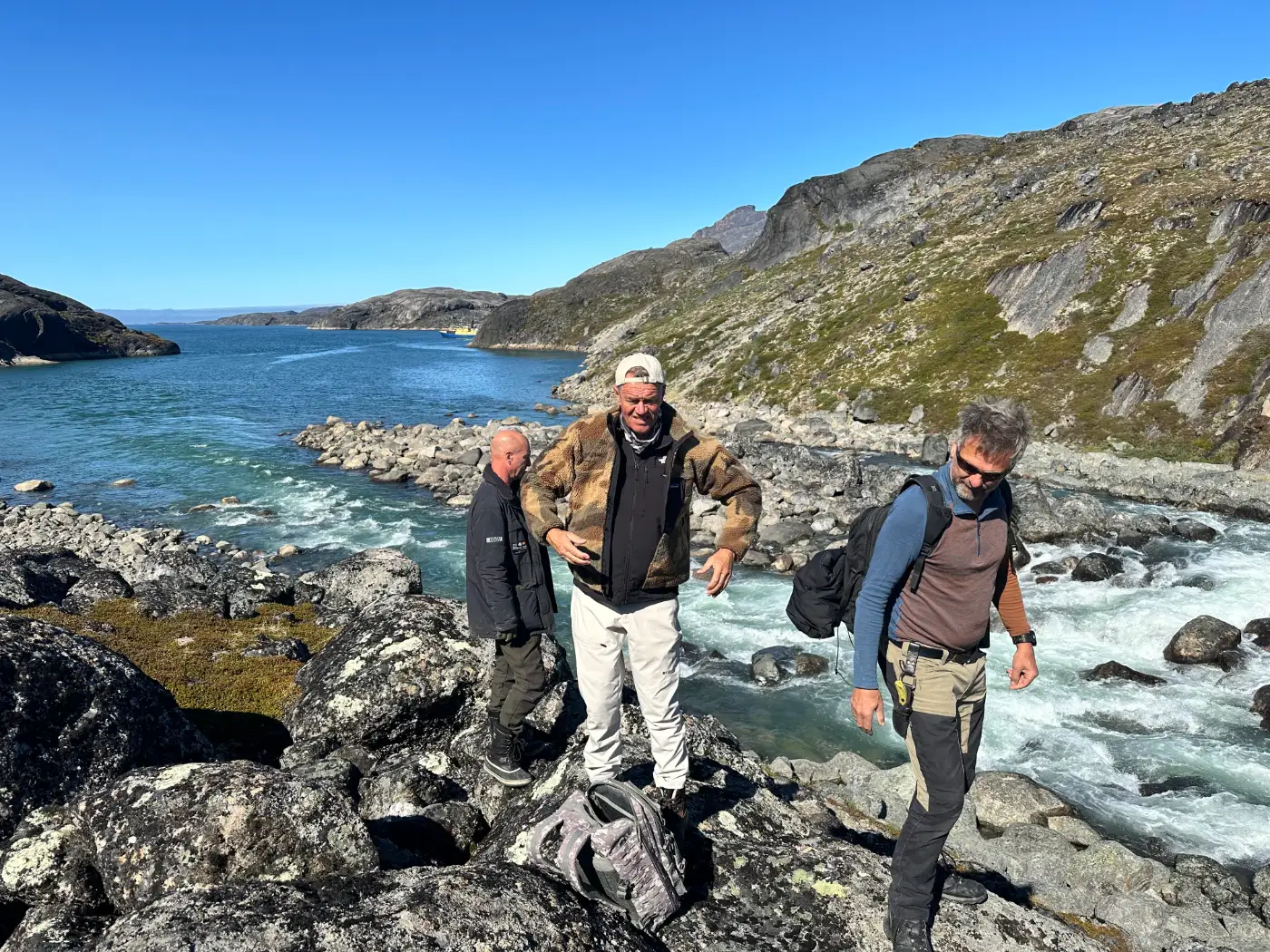
Occasionally, between dives, there’s time ashore to hike and explore. On the northern route, the Ilulissat Icefjord is one of the most spectacular sights in the Arctic and has a well-developed trail system. Elsewhere along the route, one of our guides will explore with you. For life aboard and what to pack, see Field Guide Volume 2: A Topside & Packing Guide.
How to Dive Greenland
With almost no dive infrastructure in the country, diving Greenland means bringing the operation with you, from air compressors to bolt snaps.
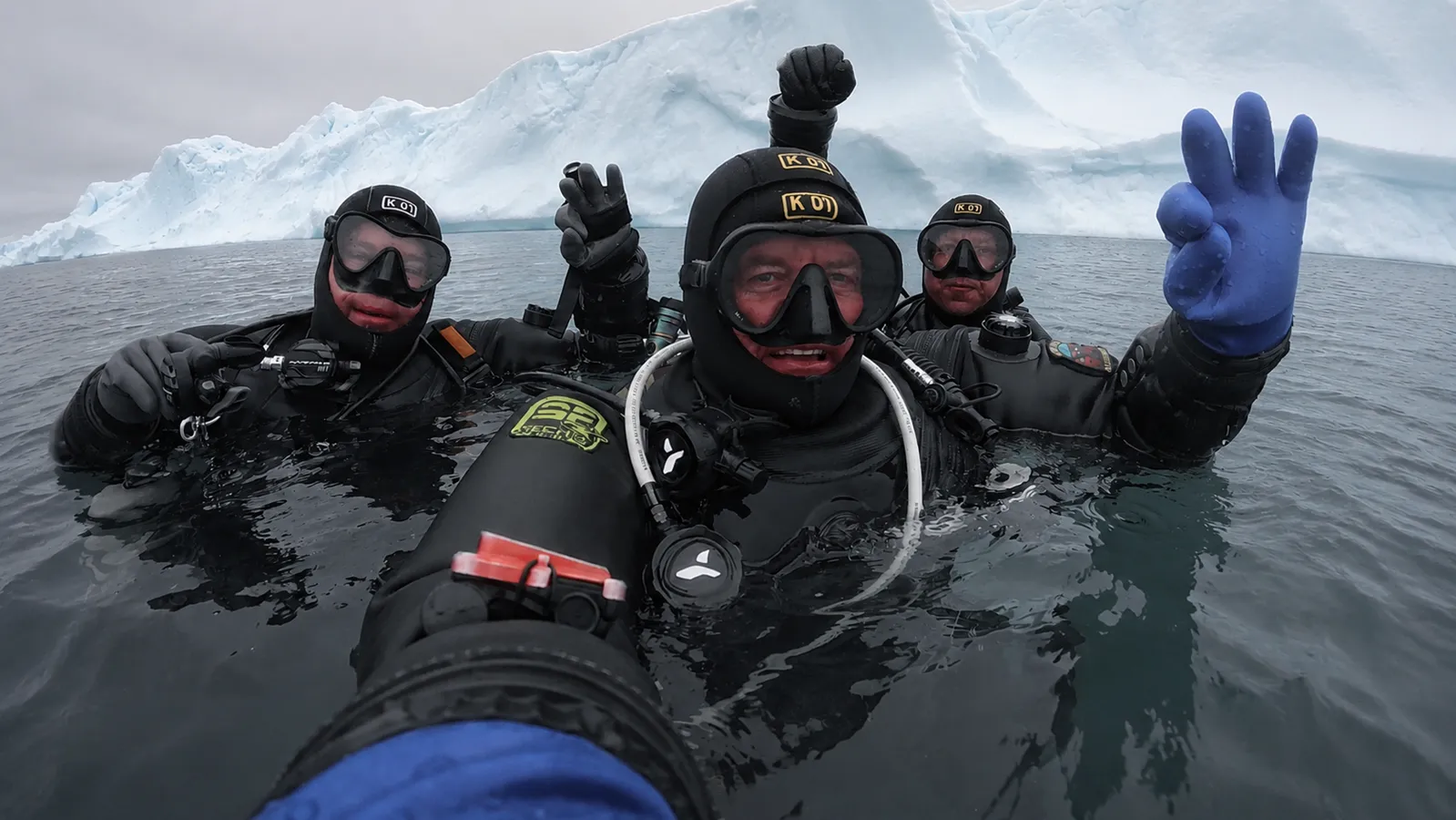
On a dive-first expedition, it’s all about the diving. Seven Oceans Expeditions runs 10-day expeditions on the west coast aboard M/S Tulu or M/V Sisak, with a crew that has a century of combined experience in Greenlandic waters. Each expedition is limited to 12 divers with three polar diving guides, diving in teams of three or four, with up to two dives a day at sites found along the way.
When to Go
The diving season runs from June to October. Summer brings calmer seas, fewer storms, mild to warm air temperatures and long days, with nearly 24 hours of daylight in early summer.
Water: 32°F–38°F (0°C–3°C).
Air: Average June highs of 42°F–50°F (5°C–10°C). An occasional warm spell into the 70s°F (low 20s°C) isn’t unusual.
Daylight: North of the Arctic Circle, around Disko Bay, the sun doesn’t set from late May to late July. Nuuk, south of the Arctic Circle, has nearly 24 hours of daylight in June. Days shorten through September and October.
Things to Know
- No technical training required. Summer diving in Greenland is open-water diving. On SOE expeditions, we don’t dive overhead environments or under the ice.
- Drysuit experience is required. You should be comfortable managing buoyancy and trim in a drysuit, with dry gloves and polar undergarments, in water as cold as 32°F (0°C). If you need more cold-water experience, the Polar Prep® Series will get you ready.
- Maximum depth on SOE expeditions is 25 m (82 ft). We dive conservatively in polar water. The nearest recompression chamber is in Iceland, so we plan every dive to stay well within no-decompression limits.
- Bring backups. There is no dive shop in Greenland. See the Gear & Equipment Checklist.
- Getting there. Nuuk is served from Newark by United (seasonal, June to September), from Copenhagen by Air Greenland (year-round) and from Reykjavík-Keflavík by Air Greenland and Icelandair.
Sources: Visit Greenland: Fish · Fisheries and Oceans Canada: Arctic Char · Greenland Institute of Natural Resources: Lumpfish in West Greenland · Diversity (2018): Kelp Forests and Coralline Algae Habitats in Southwestern Greenland · Frontiers in Marine Science (2019): Kelp Depth Limits in Disko Bay · Visit Greenland: Whale Watching · Greenland Travel: Seals · UNESCO World Heritage Centre: Ilulissat Icefjord · Natural World Safaris: Polar Bears in Greenland · Visit Greenland: How to Get to Greenland