

Ice Diver Certification & Polar Readiness
Earn your SDI Ice Diver certification under the ice in Northern Norway, then gain additional cold-water experience in the cavern zone of one of Scandinavia’s most famous dive sites.
Why Dive Water This Cold?
Cold water holds some of diving’s most rewarding experiences: new underwater landscapes, dramatic scenery topside, marine life you’ve never seen, and remarkably well-preserved shipwrecks. And once you know you can dive water of any temperature, the whole world opens up as a place to dive.
Many divers say they’d never dive water this cold. The truth is, it isn’t nearly as hard as most think. It’s a problem you solve, not a wall you stop at. You don’t need technical training. A drysuit, dry gloves, warm undergarments and a bit of guidance, and you’re there. Prepare well, and you won’t be cold.
Not toughness. Readiness.
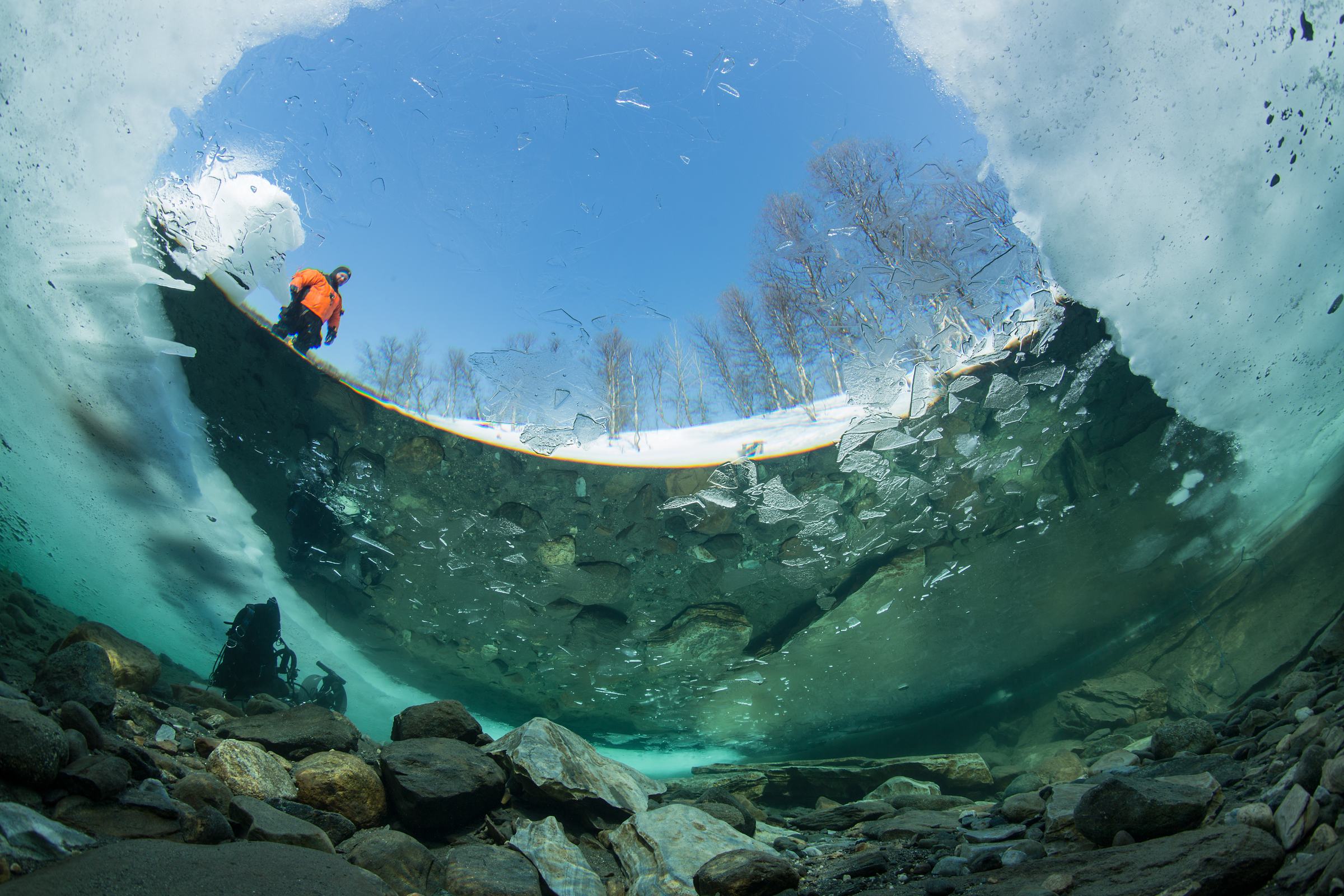
The Last Step Before a Polar Diving Expedition
Four days and eight dives at Plura Valley, near the town of Mo i Rana in Northern Norway. Two days under the ice earning your SDI Ice Diver certification, then two days of polar readiness dives in the daylight zone of the Pluragrotta cavern. No cavern certification is required. Water temperatures sit near freezing, comparable to Greenland, making this the ideal preparation and dive site for a Seven Oceans Expeditions polar diving expedition.
Registration on a Seven Oceans Expeditions polar diving expedition is not required to join this program.
Plura Valley
Plura Valley sits at the entrance to Pluragrotta, the deepest cave in Northern Europe and the most popular cave dive in Scandinavia. Cave divers travel here from all over the world.
You won’t need a cave or cavern certification. Ice diving takes place in the open water of the frozen lake in front of the cave. On days 4 and 5, polar readiness dives stay within the cavern’s daylight zone, where the clear water and large passages make Plura an ideal place to learn.
Your host is Jani Santala, Chief Instructor Trainer and the man behind Plura Valley, and a Seven Oceans Expeditions Resident Explorer.
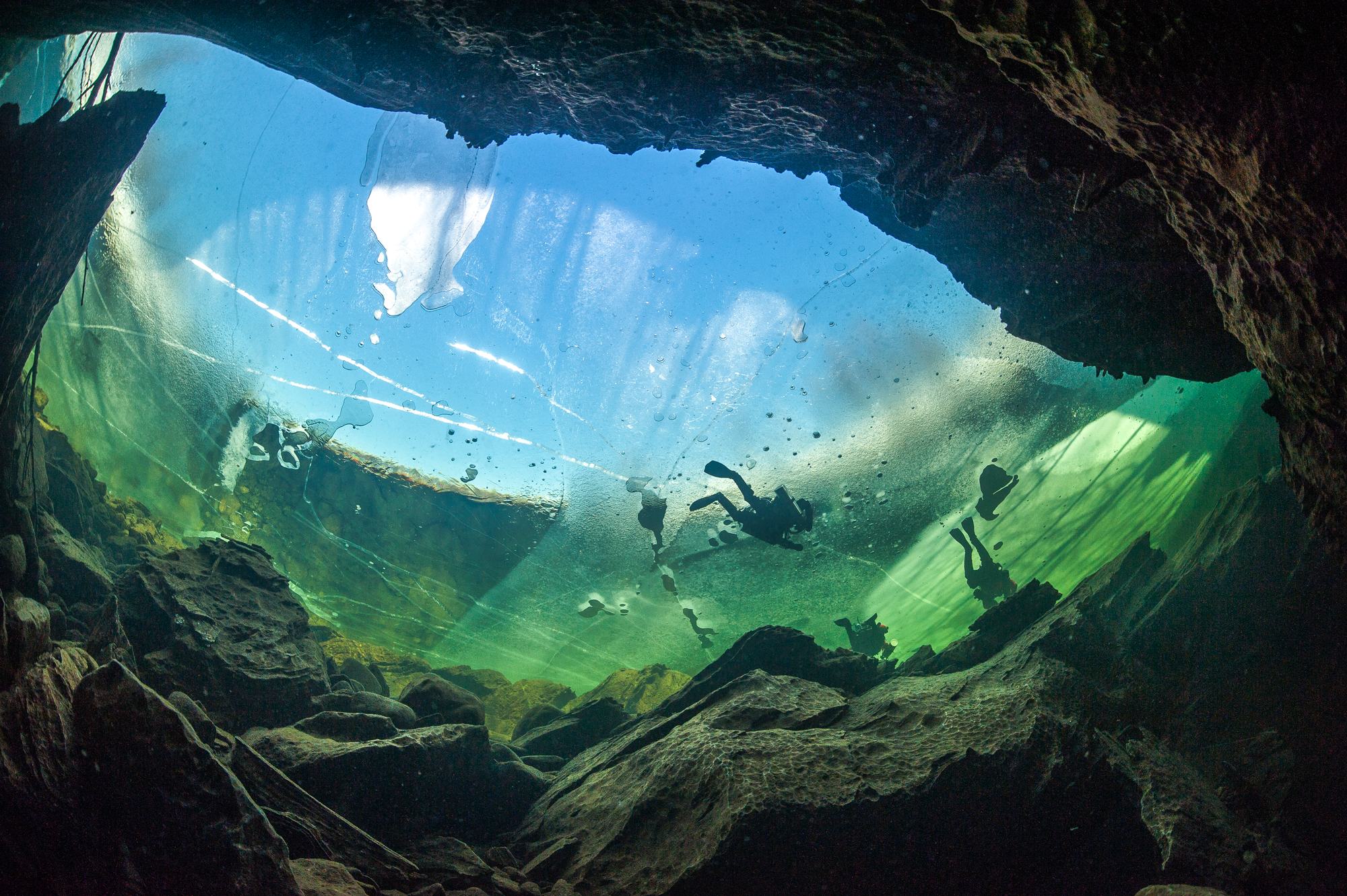
SDI Ice Diver Certification
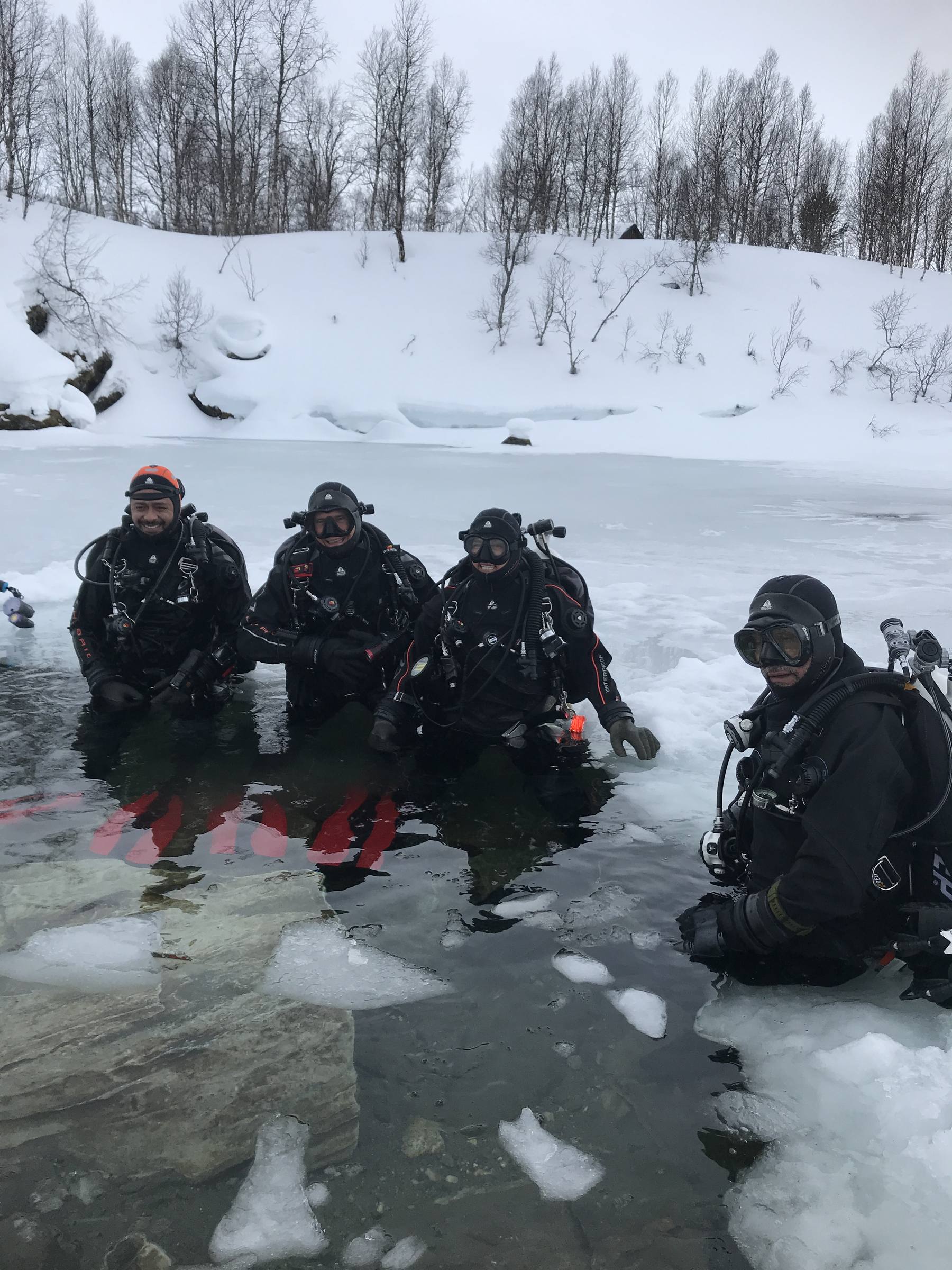
Ice diving is a team operation. Every diver is tethered to the surface and tended at all times.
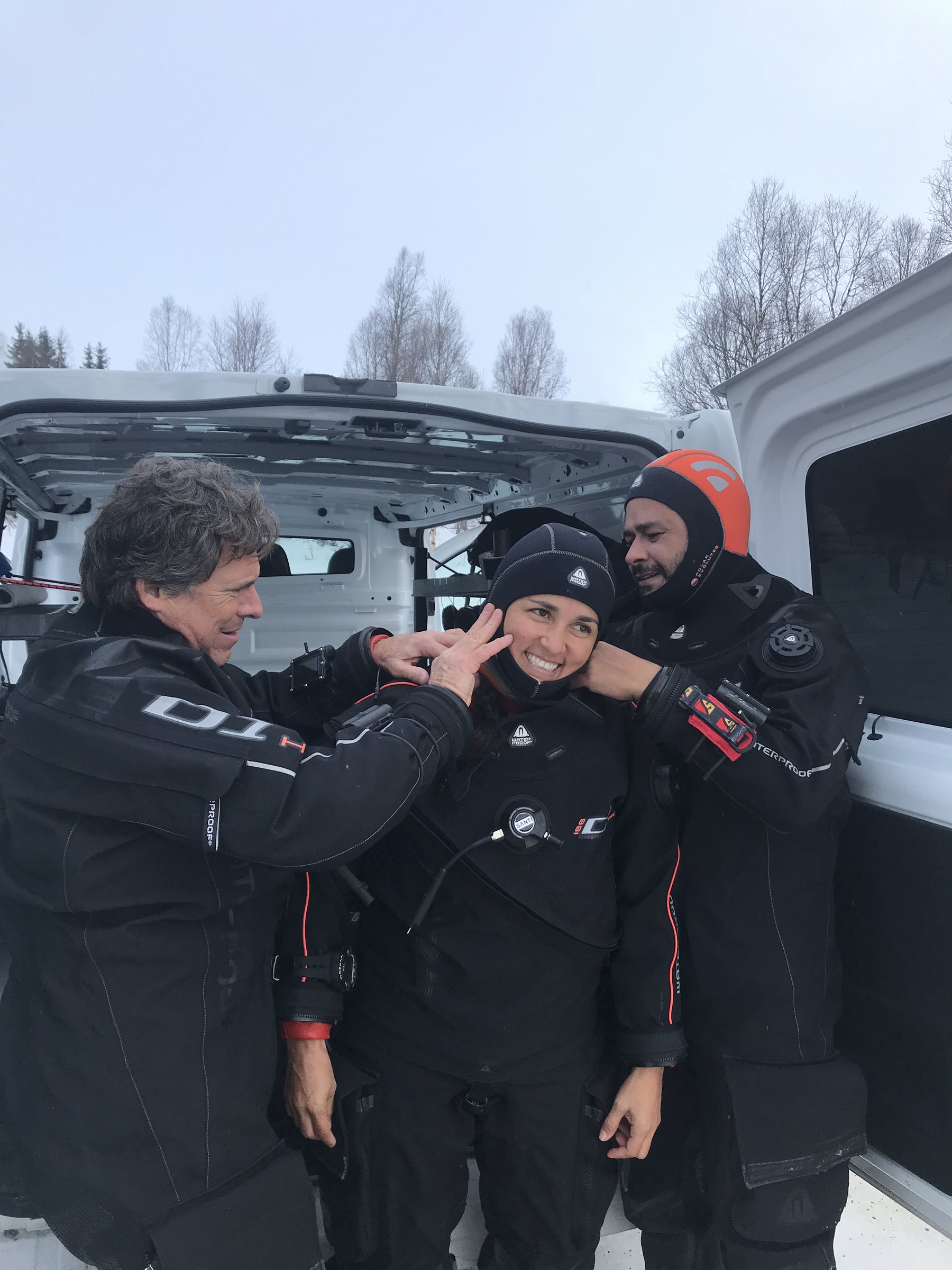
Surface Operations & Briefing
Before anyone enters the water, the team sets up camp on the ice.
- Set up shelter from wind and cold
- Check that regulators are dry and cold-water rated so they don’t freeze and free-flow
- Review emergency procedures: free-flowing regulator, lost diver, broken line
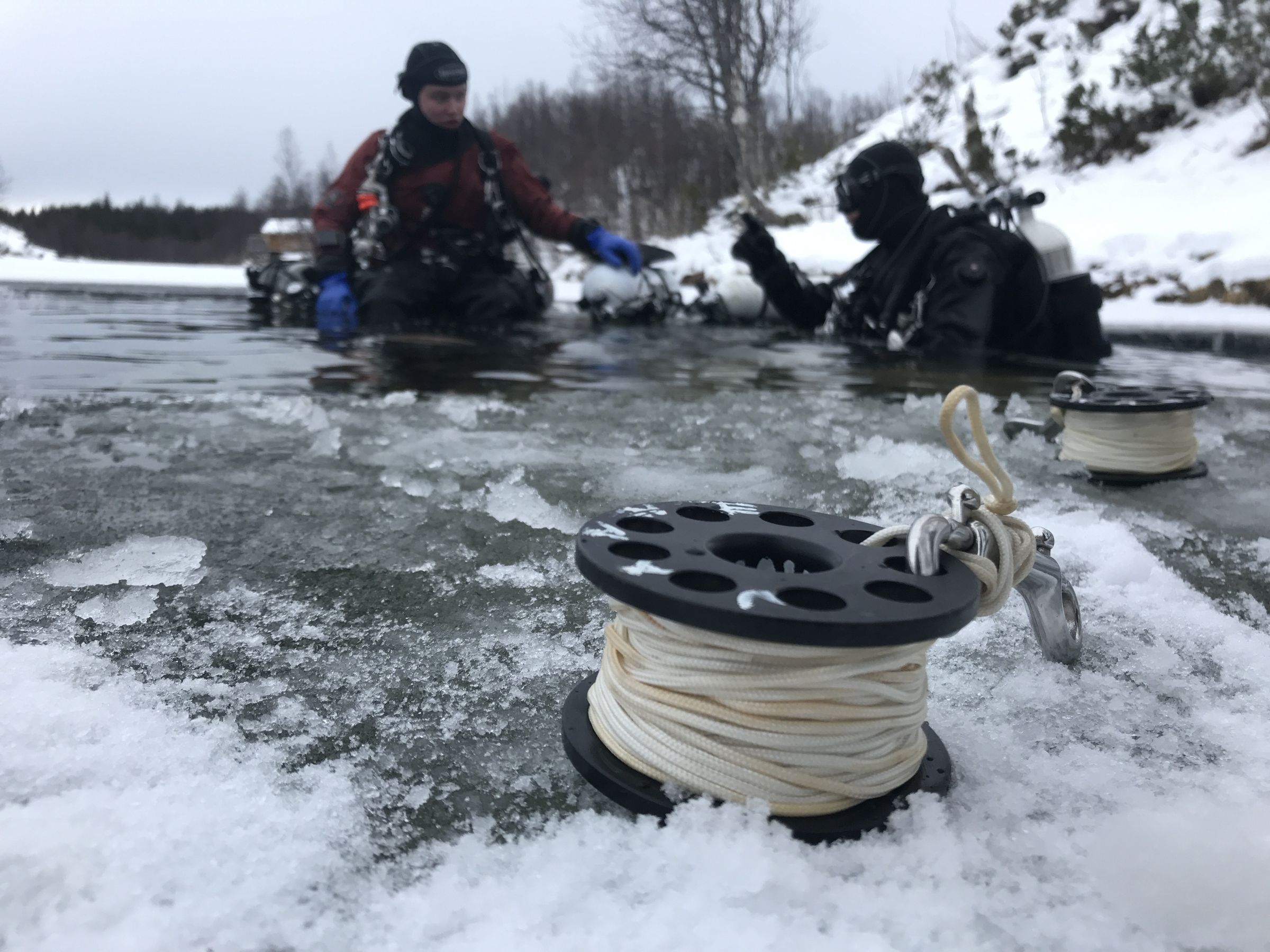
Cutting the Entry Hole
The hole is your only way in and out, and you’ll help make it.
- Cut through the ice with chainsaws and hand saws
- Cut a triangular hole, with a corner each for the instructor and two divers
- Slide the ice block under the sheet so it can be pulled back into place afterward
Team Roles
You’ll rotate through every position on the team.
- Ice Diver: tethered by harness, diving with a buddy and an instructor under the ice
- Line Tender: at the edge of the hole, managing the tether and communicating through line-pull signals
- Safety Diver: geared up at the surface, ready to deploy on a longer line if needed
Under the Ice
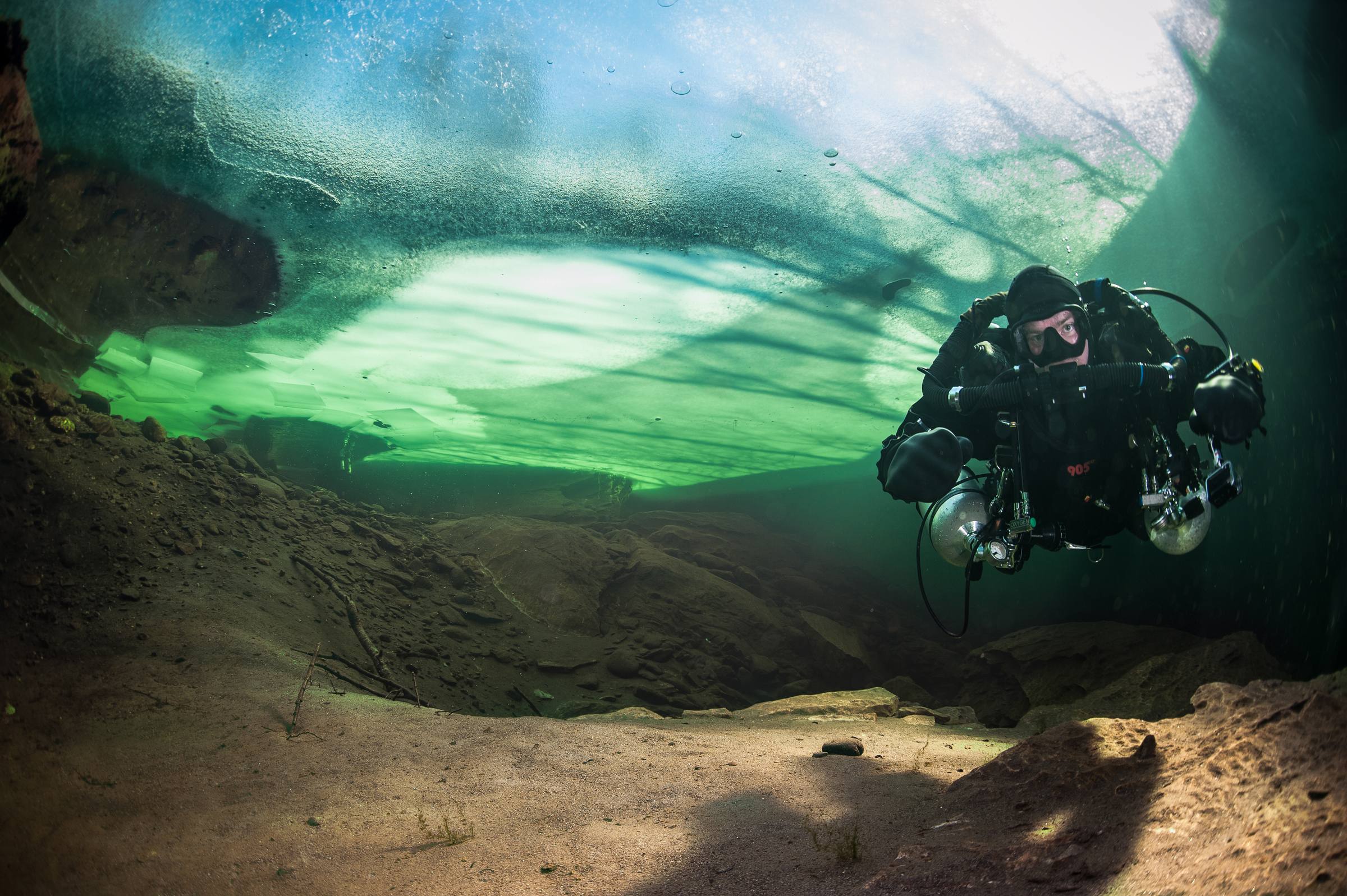
Supervised dives of 15 to 20 minutes each, where you’ll practice:
- Line signals with your tender
- Dive lights and navigation under an overhead
- Precise buoyancy control beneath the ice ceiling
Polar Readiness Dives
Days 4 and 5. Four dives in the daylight zone of the Pluragrotta cavern. No cavern certification required.
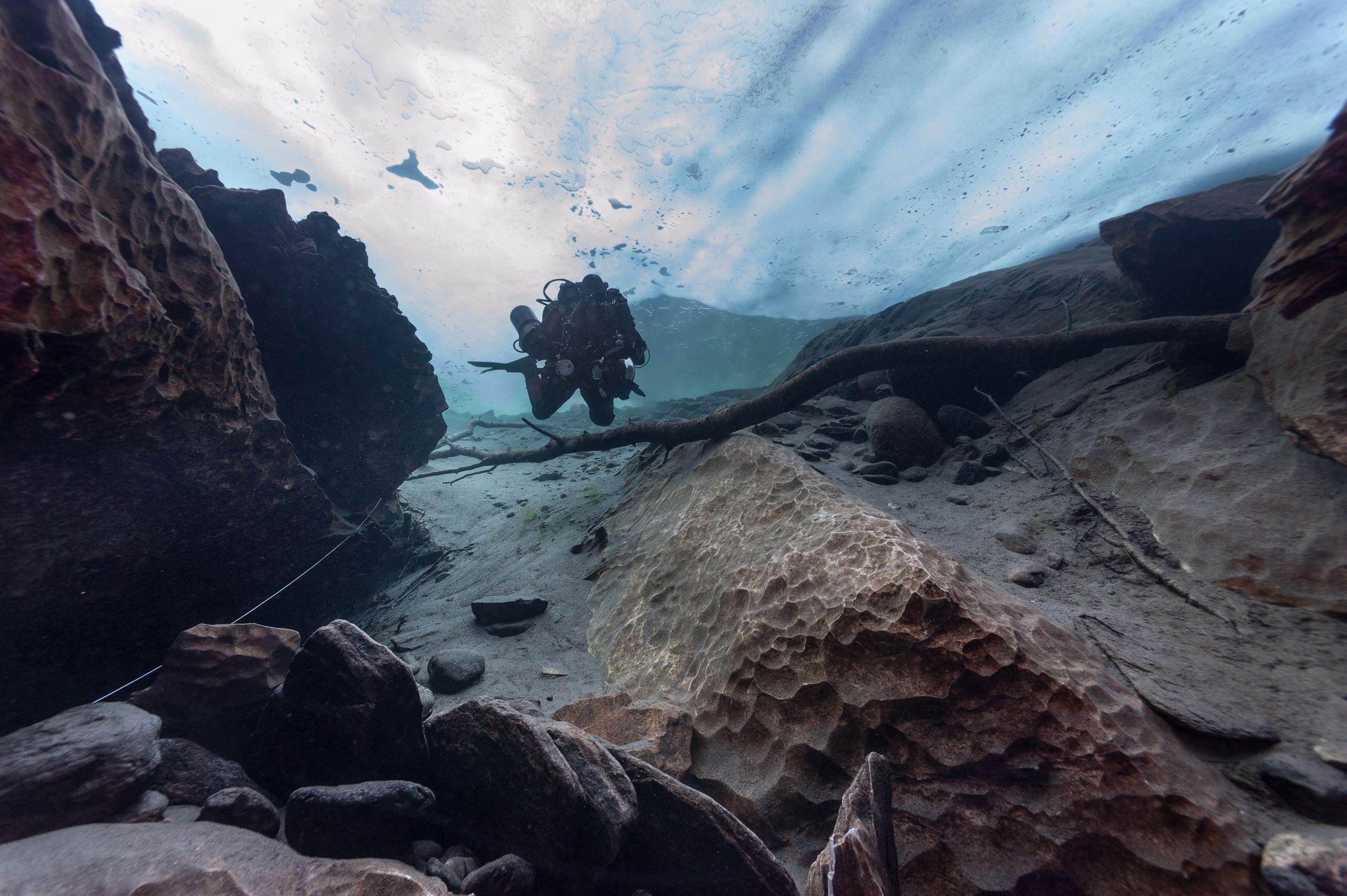
With your ice certification complete, you’ll dive the cavern zone at the mouth of Pluragrotta with your instructor, always in sight of natural daylight. The cold, clear water and overhead build the same skills a polar expedition demands.
Under the ice you rely on a tether tended from the surface. In the cavern you follow a guideline. Experiencing both makes you a more complete diver under any overhead, including the icebergs of Greenland.
What You’ll Practice
- Buoyancy, trim and positioning
- Propulsion techniques
- Following a guideline
- Gas management
- Light and hand signals, and team communication
- Diving beneath an overhead in cold water
The Itinerary
Arrive in Mo i Rana: Transfer, Course Review & Gear Check
Transfer from Mo i Rana Airport (MQN) to Plura Valley, about 30 minutes. Check in, then meet your instructor and the team to review the course and check equipment.
Ice Diver Certification: Day One
Set up surface operations, cut the entry hole, practice team roles, and complete your first ice dives.
Ice Diver Certification: Day Two
Complete the remaining ice dives and your SDI Ice Diver certification.
Polar Readiness Dives in the Pluragrotta Cavern
Guided dives in the cavern’s daylight zone to build experience under an overhead. No cavern certification required.
Depart
Transfer to MQN and depart.
Everything is within walking distance on site: accommodation, restaurant, dive center, dive site and sauna. Itinerary subject to weather and ice conditions.
Mo i Rana, Norway
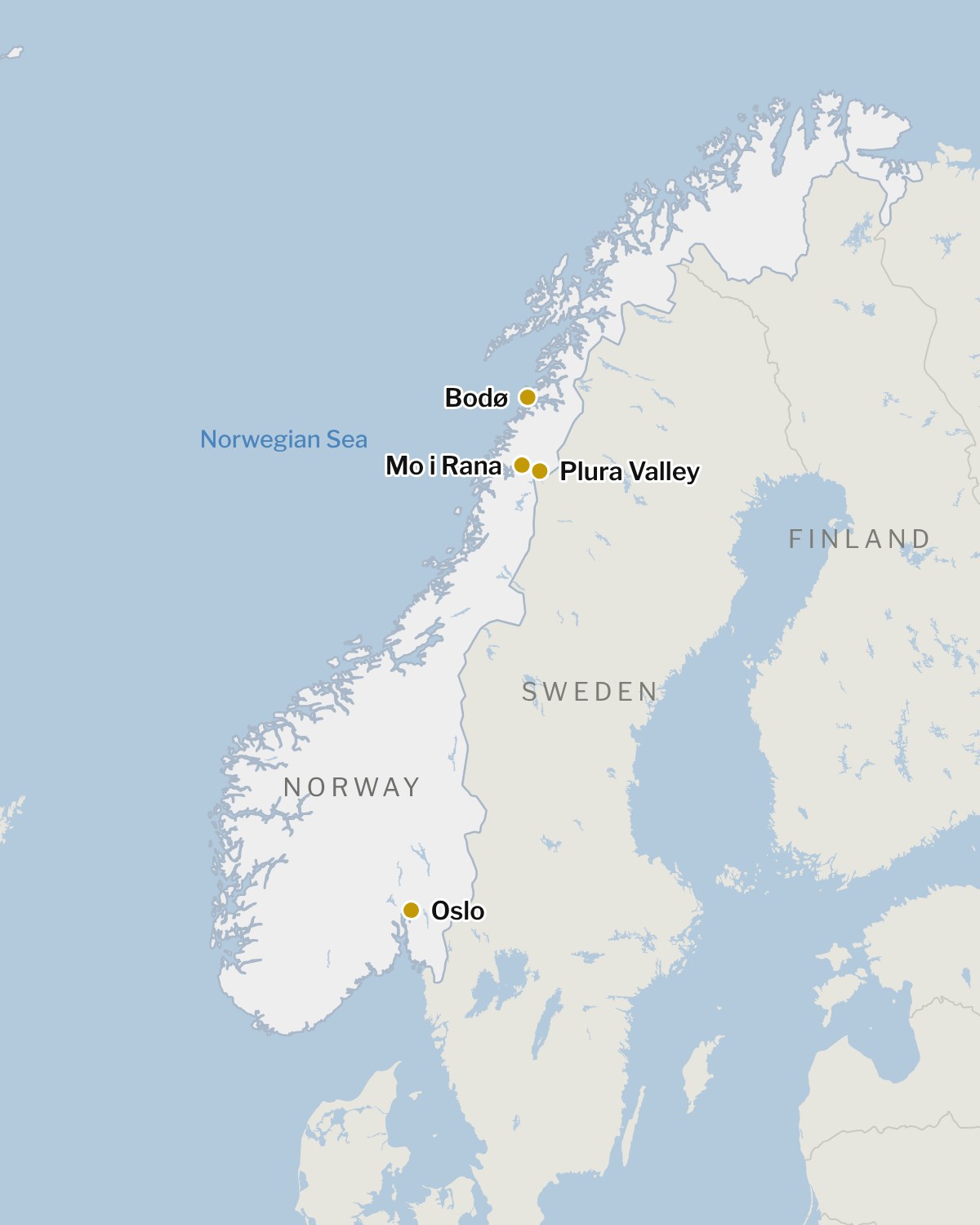
Fly into Mo i Rana Airport (MQN), serving the town of Mo i Rana in Northern Norway, with connections through Oslo and Bodø.
Round-trip transfers between the airport and Plura Valley, about 30 minutes, are included. No car is needed.
What’s Included
Included
- 5 nights at Plura Valley
- Full board: breakfast, lunch and dinner on site
- Round-trip transfers from Mo i Rana Airport (MQN)
- Course briefing and gear check the evening you arrive
- SDI Ice Diver certification
- Two days of polar readiness dives in the Pluragrotta cavern
- Cylinders, weights and EAN32 fills
- Ice diving safety equipment and surface support
- Sauna access
- Rental gear, upon request
Not Included
- Flights
- Personal dive equipment
Where You’ll Stay
All accommodation is on site at Plura Valley: four single rooms and two double rooms, each with a private shower and toilet, plus a separate guesthouse with four bedrooms and shared bathrooms. Single rooms are limited and subject to availability.
2027 Ice Season
Small teams. Courses run when ice conditions allow. Registration on a polar diving expedition is not required.
March 9–14, 2027
| Program | Double occupancy | Single occupancy |
|---|---|---|
| Ice Diver Certification & Polar Readiness 6 days / 5 nights · 8 dives · March 9–14 | $2,165 | $2,210 |
Who This Is For
Preparing for a Polar Expedition
You have drysuit experience and dive with confidence, but want to learn the nuances of cold water: equipment adjustments, weighting, and what it really feels like, in a controlled, well-supervised setting. Ideal preparation for a Seven Oceans Expeditions polar diving expedition, and you leave with an SDI Ice Diver certification. Registration on an expedition is not required.
You’ve Always Wanted to Go Ice Diving
Earn your SDI Ice Diver certification with a small team and an experienced instructor at one of Scandinavia’s most famous dive sites, then dive the daylight zone of the Pluragrotta cavern.
Prerequisites
Certification & Age
Open Water certification or equivalent from a recognized agency. Minimum age 18.
Logged Dives
A minimum of 25 logged dives.
Drysuit Proficiency
Comfortable diving a drysuit. If you’ve never dived a drysuit, we recommend getting drysuit certified and gaining experience first in warmer water. Ask about our Polar Prep® Series program in Tulum, Mexico.
Dry Gloves
First time with dry gloves? It’s fine to try them here. If you can dive them beforehand in warmer water, even better.
Nitrox
Nitrox certification is required. EAN32 is the standard gas at Plura Valley.
Water temperatures sit around 32°F / 0°C. Air temperatures in Northern Norway in March can fall well below freezing.
Diving Configurations
Single Cylinder
Ice diving only. Requires a redundant regulator setup or a pony bottle. For cavern diving, a single is allowed only with an independent redundant gas supply.
Twinset
Preferred for cavern diving. Bring cold-water regulators, hoses, and an appropriate backplate and wing.
Sidemount
Preferred for cavern diving. Bring cold-water regulators, hoses and your sidemount harness.
Cylinders available: steel 12 L singles and double 12 L sets, aluminium S80, 7 L, and carbon.
Dive Gear Checklist
Need help selecting gear, or recommendations on where to buy what you need? We’re happy to help. Drysuits, regulators and thermal protection are also available to rent at Plura Valley.
Exposure Protection
- Drysuit
- 420 g bodysuit undergarment with a wicking base layer, or three layers of undergarments (wicking base layer, fleece mid layer and insulated outer undergarment) warm enough for cold topside temperatures and 32°F / 0°C water
- 7–8 mm hood
- Dry glove ring system, dry gloves and dry glove liners
- Socks: a thin wicking base sock under a thick warm sock, or two warm socks.
- Rock boots, if not integrated into your drysuit
- Neck and wrist seal lubricant
- P-valve supplies: condom catheters (men) or She-P wings (women)
Dive Gear
- Two sets of environmentally sealed, cold-water rated regulators: two first stages and two second stages
- Wing or BCD, or sidemount harness
- Dive computer
- Mask
- Fins
- Compass
- Two dive lights, with batteries and charger
- Bolt snaps and double enders
- Cutting device
Ready for the Ice?
Teams are small and dates depend on ice conditions. Reserve your place.
Book Now →